So we’re in the 1990s now. Communism is now long gone and we’re kind of in the middle of really taking in everything Western pop culture has to offer. We have Spice Girls, tie dye, denim jackets, and a whole lot of other 90s staples now. Between cinema releases of classics like Beauty and the Beast, Aladdin and The Lion King and the Disney shorts that would run on public TV on Saturday mornings and Sunday evenings, even the kids were easily indoctrinated into the Western way of things.

This of course included all new sorts of media. First came the walkman, then the discman and then, of course, home computers. Little old me was actually a proud owner of an Amiga back when I was five or six-ish, so I had a pretty early start with computers. Then PCs with Windows started spreading and more and more kids on the block were actually starting to play video games. Yes, that era had begun.


But this series is about The Witcher, so I feel it’s important to point out that at this time the books were steadily going with regular releases. Because unlike certain other fantasy authors who shall remain nameless, Andrzej Sapkowski actually kept on writing the thing until he was finished. And by the time he was finished with The Lady of the Lake in 1999, its ending was greeted not without controversy. It was certainly surprising and deeply moving - deeply upsetting to some - but that’s just how it goes with art. Whatever certain voices were saying, however, it did little to diminish the local - and international - enthusiasm people had for The Witcher.

And so people started talking about an adaptation. While a movie or TV show were pretty much a given (don’t worry, we’ll get to those later), it was this new medium that would actually turn out to be the Witcher’s gateway to the Anglosphere. Though the journey wasn’t that clear-cut. It was the late 90s when Sapkowski was first approached by a game studio - Metropolis Software - with a proposal of adapting the plot of the books into a video game. Though Sapkowski himself doesn’t come from a generation that generally enjoys video games and to this day he doesn’t really care for the medium himself, he agreed to their terms. Unfortunately, the project never saw the light of day, as it proved too challenging for the small studio, leading to its cancellation, with Sapkowski not seeing a penny out of the whole deal.


It wasn’t until the 2000s that Sapkowski was approached once again by a different studio. This time, it was CD Projekt. At the time, they were known exclusively as a video game publisher. Having localized many popular games at the time and having the reputation of one of the most competent publishers in the country, they were ready to develop a game of their own. Having been burned by a video game adaptation once already, Sapkowski agreed to give CD Projekt the license but only on condition that he be paid a flat rate from the get-go, rather than earning commissions from the brand. In his eyes, there was no reason why this would succeed when the previous endeavor failed. The sum he got was nice, of course, but we now know that it wasn’t the best choice in his lifetime. But we’ll talk more about that once we reach the third game.

It’s hard for me to discuss what exactly was happening in the early development stages of the Witcher 1, since there is a lot of conflicting information going around, most likely due to the fact that we had two attempted Witcher projects. Because of this, I can’t with 100% certainty say whether what I’m about to tell you applies to CD Projekt’s early attempts, or the scrapped Metropolis Software project. However, it does seem like the game was meant to be completely different at the beginning. The story would be completely separate from that of the books, and you’d get to create your own Witcher, with character customization and everything.


In the end, however, that idea was scrapped, in favor of making the game a sequel to the books. So once again, we follow Geralt of Rivia, the Witcher on a completely new adventure after a miraculous recovery. In an incredibly smart move, however, he has amnesia this time. Cliché though it may be, it’s actually the perfect device here. CD Projekt actually had no idea if they’d be able to make a sequel, but they still wanted to make this game as accessible as possible, so they set it after the books and crammed in some cool references and some arguably less cool expies of book plot points and characters, but made it so that no book knowledge was required to fully enjoy the plot, nor would the game actually spoil the books for those that would like to later come back to them after playing the game. It’s to this day the only game in the series that gets this distinction, and I think CD Projekt Red should be commended for doing such a good job at it.

But that’s far from the only good thing about the game, so let me just start talking about it properly. The Witcher is a profoundly weird game. It’s a weird frankensteinian mesh of all these different elements that are so barely stitched together that, for all intents and purposes, should not work - but they do. To this day, The Witcher 1 is quite simply one of the most unique RPGs I’ve ever played, and even though it is very much overshadowed by its successors, along with just being plain archaic in this day and age, I still think it’s fantastic.


I’ve already mentioned how this is a sequel to the books and we’ve got an amnesiac Geralt hunting monsters. Storywise, however, this game is definitely in the spirit of the books in more ways than one, and it wants you to know it through its opening cinematic. Created by Tomasz Bagiński, who even back then was known for being an Oscar-nominee for his short CG-animated film The Cathedral and who remains closely tied to the Witcher franchise in all its incarnations to this day, it carefully recreates one of the most iconic moments from the Witcher shorts - that being the battle with the Striga. The scene has aged remarkably well, though you can clearly tell the technology has advanced a lot since 2007, but it’s really mostly carried by Bagiński’s incredible direction and attention to detail. See for yourself, if you’re interested.


We soon get transported to Kaer Morhen, where we meet other Witchers and, surprisingly enough, Triss Merigold - and not Yennefer! More characters from the book show up later, but they’re introduced in a way that makes sense to newcomers. Combine that with the very detailed journal entries, and the game actually does a really good job of standing on its own. Readers of the books will find a lot of familiar stuff here, and I don’t just mean in place and character names. The way the story unfolds, the quests are structured, the dark yet funny atmosphere - all of this is incredibly faithful to the source material. Though game writing was still in its infancy back in the day and the writers definitely lack Sapkowski’s level of sheer writing prowess (to the point that at some times it does feel like weak fanfiction), the story still makes the game feel like a Witcher game. Combine that with an alignment system and factions that at once remind me of SMT and make me feel very much like I’m in the Witcher world, and you’ve got yourself a pretty compelling narrative all throughout.

My personal favorite is chapter four - out of five - simply because I’ve never actually seen anything like it in a video game. It’s an Archadian Interlude - the action culminates in chapter three, only for Geralt to be whisked away somewhere completely different for what is essentially a breather episode. Like most things in this game, it sounds like it shouldn’t work - but then it really does. The chapter actually gives you the time to really contemplate on what just happened, while also enhancing both it and the world through a magical story that combines a Polish literary classic, Arthurian myth, and something Lovecraftian. It’s really something to be experienced first hand, and it’s actually the perfect way to combat that third act lull that usually happens in role-playing games.


One thing I will never live down, however, is a very specific writing decision that I consider kinda abhorrent, and whose consequences turned out to be much more long-lasting than I feel the writers anticipated. I’ve already mentioned how Triss Merigold is in the game. In the books, she was an important character, but not really more than the dozen other secondary characters that move that complex plot forward. She was notable for being Geralt’s one-night stand - which was induced by her using a love potion - that never amounted to anything, other than her increased obsession with Geralt. In this game, she is one of Geralt’s two potential romance option… while the other is another one-night stand Geralt had in the books. For some reason, the writers saw it fit not to bring back Yennefer, who was Geralt’s entire motivating factor for anything in the books. And by for some reason, I mean a very specific, insidious reason. Apparently, the writers decided that they didn’t get why Geralt would ever decide to be with such a terrible, domineering nag as Yennefer when there was a perfectly willing, young Triss right there that was ready to jump on Geralt whenever he would want it. Considering how out of his way Sapkowski went to subvert typical fantasy love interest tropes with Yennefer, and how much she felt like a fully realized character, and how much her and Geralt’s relationship felt real, it makes me feel that a lot of what made the books great in my mind just went over their heads - and let’s be honest, it’s just plain sexist. As a result of this, and the fact that Yennefer doesn’t show up in the game until Wild Hunt, we now have one of the most violent shipping wars ever - and it’s one that shouldn’t even exist in the first place. Thankfully, the Netflix show seems to have tipped the scale a bit, so it should all calm down now.

And speaking of sexism! Oh boy. This is the game with the infamous sex cards. If you’re unfamiliar with this, basically every woman in this game is DTF, always. Like, it’s a literal warzone outside and we’re two nurses tending to the wounded and the sick and you’re going to the final battle, but let’s have sex right now - but be quiet so the medic lady who is also your potential romance option doesn’t find out. And then if you say yes, since they couldn’t animate the scenes well, you get a card with a softcore image on it that you can look at at your leisure. It’s actually encouraged that you collect them all, since there’s a separate catalog for them in the journal, but it’s thankfully completely skippable - I myself have made it a point to play a chaste Geralt. To say this is incredibly jarring at worst and stupidly hilarious at best is an understatement. I get that Geralt has sex in the books - with more than one women over the course of the books at that. I get that he’s actually supposed to be more attractive to women due to Witcher pheromones or whatever. I really get that. But this is really kinda terrible. Whether it’s just tasteless or crossing the line twice and straight into hilarity is up to you to decide, however. But yeah, remember that it’s totally skippable.


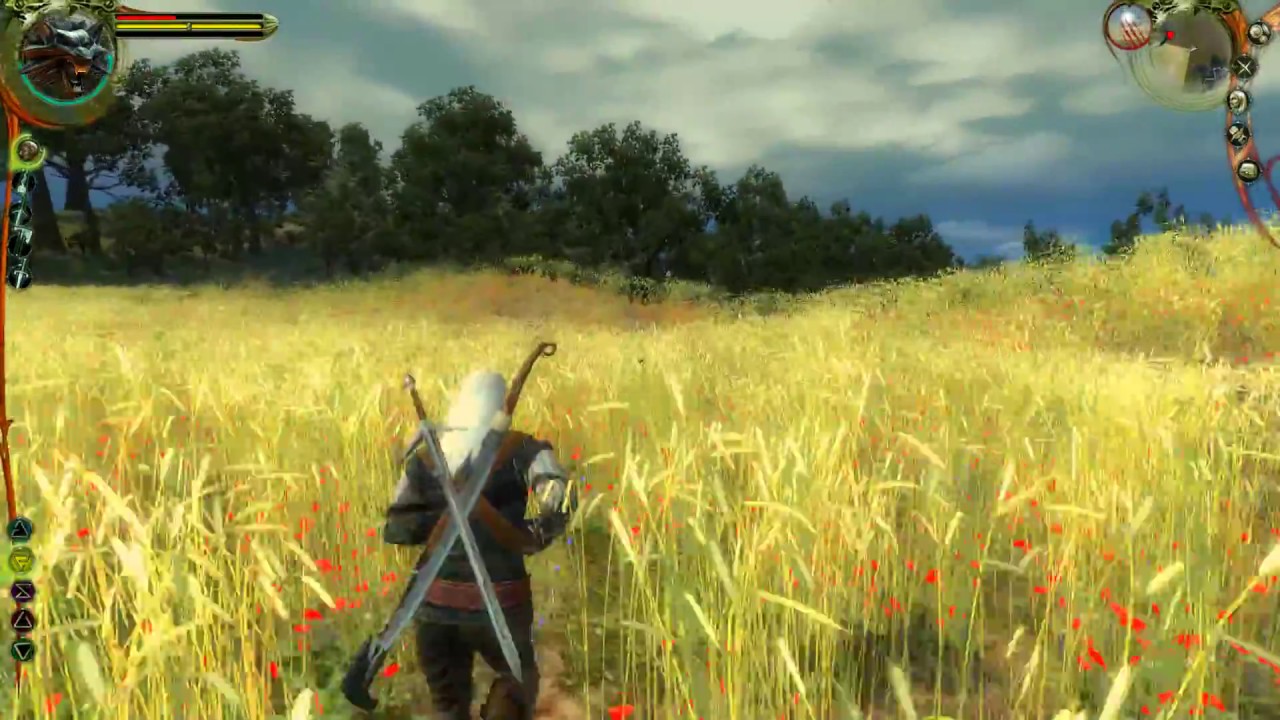
I guess this is as good a segue as I’ll get for the gameplay part. The first thing you need to know is that The Witcher runs on the Aurora engine, making it a de facto Neverwinter Nights. You can definitely play it in an overhead view like those games, but they actually added the function of a rear-view camera, which is much more preferable, if you ask me. The active pause system is left intact, but there is a twist. If you hold your cursor over the enemy, it will flash red at times, giving you the signal that you can click again in order to chain attacks together. This actually kind of reminded me of Vagrant Story, and even though it’s not as developed, I liked how it worked here. Other than that, you’ve got three combat styles to choose from, that being strong, fast and group, which are all pretty self-explanatory. You’ve also got access to some basic magic through Geralt’s signs, and then there are the potions. Gathering ingredients, brewing potions, and then taking them ahead of time in specific situations is actually really important in this games and is very in-line with what was described in the books and I’m honestly a big fan of that. You actually feel like a professional who has to follow all the steps in the correct order, and then adjust your strategy on the fly based on your knowledge in order to come out on top.

A lot of what I mentioned shows up in the later games, but I feel that in certain ways, the first game did it the best. You could actually rest and make potions only at bonfires, meaning you’d really have to be prepared for dungeons and bigger monster hunts. Another thing you can only do at a bonfire is level up, which I also feel was handled best in the first games. While the skill trees in the later games are bigger,in this one it’s divided into several sections, each of which has a separate point currency that you need to use for, and the amount of each currency you get depends on your level. It made you really think about how you develop the character above the simple planning a build and then implementing it as you progress as is the case in most RPGs.


I could talk more about the gameplay - how the large areas and multitude of items to pick up is very Elder Scrollsy or how you can play dice poker pretty much wherever you go - but we’d be here all day, so I’ll just move on to the presentation. Now, here is things get a little bit more mixed. I’ve mentioned before that this game is based on the Aurora engine, so it’s actually pretty ugly. That may be too strong a word, though - parts of it are ugly. The characters look terrible and the dungeons are very drab - but a lot of the areas are incredibly pretty even today, not to mention they just feel incredibly Polish to me - more so than any other game in the series- and let me tell you, there’s something very visceral in chasing down a wyvern in a wheat feel that looks like a place you’ve actually physically visited. In that regard, I think The Witcher 1 has a lot in common with Xenoblade Chronicles - they definitely had a concept artist and a lot of care and attention to detail was put into the environments, but then I don’t really feel there was a character artist involved… or even an art director, for that matter.

Where people certainly were involved, however, is the music. The Witcher 1 has some incredibly pretty music. Though it’s less focused on strong themes than those of us who are accustomed to JRPG music may like, Adam Skorupa and Paweł Błaszczak have done an incredible job bringing the world of the Witcher to life through music that feels not only inspired by its Polish setting but true to the spirit of the books as well. A standout is the main theme of the game, which is so memorable that it even returned to the third game in full force. I’ve listed it last here, after two other tracks that I really liked.


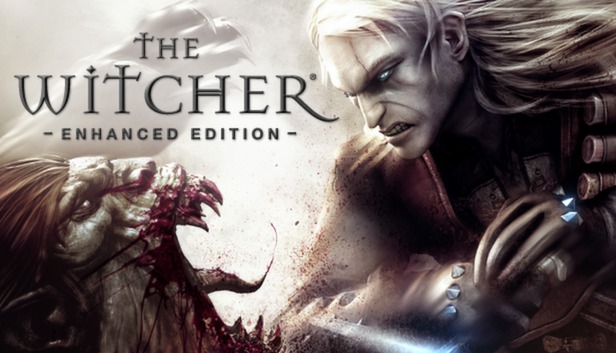
One final thing I’d like to touch on is pretty shameful, however. This is the first time anything Witcher-related has reached English-speaking countries. The guys at CD Projekt put in a lot of effort to create a game that would be appreciated by people from all around the world. Though by today’s standards it was moderate, it still brought a lot of new attention to the Witcher, and its sales were definitely boosted by the number of fans it already had around Europe. Stateside, it also did quite well for its scope, but it was not in any way helped by the downright abysmal localization. Sure, Doug Cockle is cool and everyone likes him (though I’m personally much more taken by Rozenek’s Polish Geralt), but it’s clear the budget for the English localization was nearly non-existent. Most of the other voice actors are poor, and the translation itself is just… bad. Not old JRPG bad - you don’t really see as many grammatical errors or anything. It’s bad in the sense that only about half of the dialogue was translated. I don’t know if it’s because there are so few Polish to English translators in the US, but it feels like only the gist of the lines was translated, with all the other content and flavor just being cut out for no reason other than “we couldn’t bother to translate it”. It was a downright travesty but, thankfully, it was fixed later on. CD Projekt re-released the game a year later with the subtitle “Enhanced Edition” with some minor updates to the gameplay and UI - and a now complete English translation.

I know The Witcher is not for everyone. It’s an old obtuse game, with a tutorial section that’s utterly mind-boggling and a first chapter that will really test your patience. Still, I kept playing it, and as soon as I finished chapter one, something clicked and I was hooked. How much you like this game will probably depend on how much of a tolerance you have nowadays for games from this era, as well as how immersed you were in the world of the Witcher before this. That said, I’m really glad this game exists, and not only because it led to other games or that it continues the story from the source materials. The first game is one that has some incredible charm that’s unique to it because of the exact time it came out in, because of how much the creators were excited to adapt the source material they so loved, and because of how much fun they were having just going wild and creating their first video game. There truly is something special about the first Witcher game.